


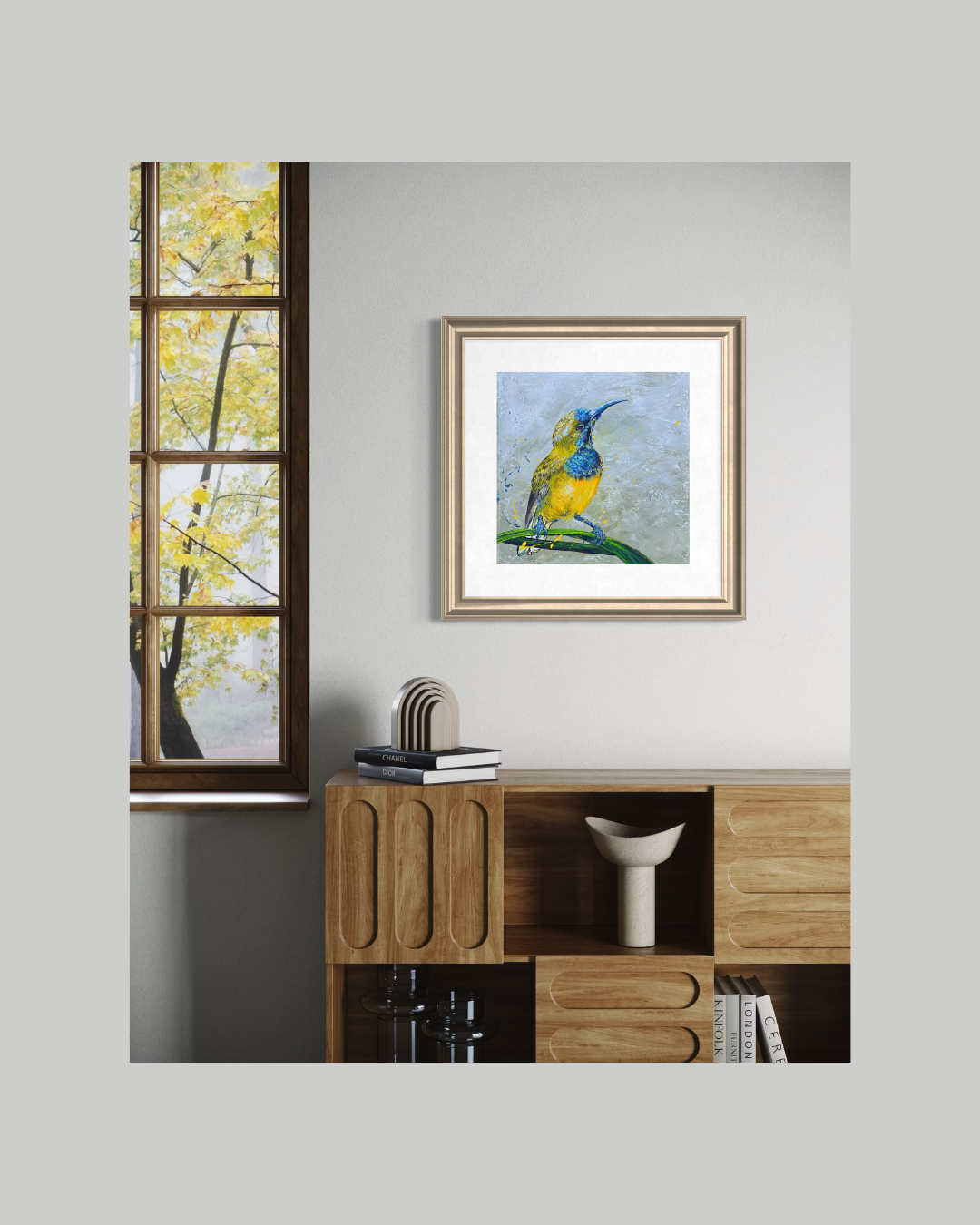
FOR SALE "The Spectacular Little Olive-Backed Sunbird" Acrylic on canvas.
FOR SALE "The Spectacular Little Olive-Backed Sunbird" Acrylic on canvas.
1 In stock
Sub total:
$999.00Couldn't load pickup availability


Description
One of the delights of a lush garden in tropical Queensland, apart from the colourful butterflies, is the sight of an Olive-backed Sunbird flitting about among the flowers, probing them with its gracefully curved bill, often while hovering. Equally enchanting is stumbling across its strange, suspended nest, hanging from a twig or part of a building by a long, thin cord of grass and fibres.
One of the most remarkable adaptations of the Olive-backed Sunbird is its slender, curved bill, perfectly suited for sipping nectar from flowers. As avid nectar feeders, these birds play a crucial role in plant pollination, acting as important agents of reproductive success for many flowering plants in their ecosystem. As they flit from flower to flower in search of nectar, they inadvertently transfer pollen, facilitating the fertilization process and contributing to the diversity of plant species in their habitat.
While nectar forms the primary component of their diet, Olive-backed Sunbirds also supplement their nutrition with other food sources such as insects and spiders. Their versatile feeding habits allow them to exploit a wide range of resources, ensuring their survival even in times when nectar may be scarce.